

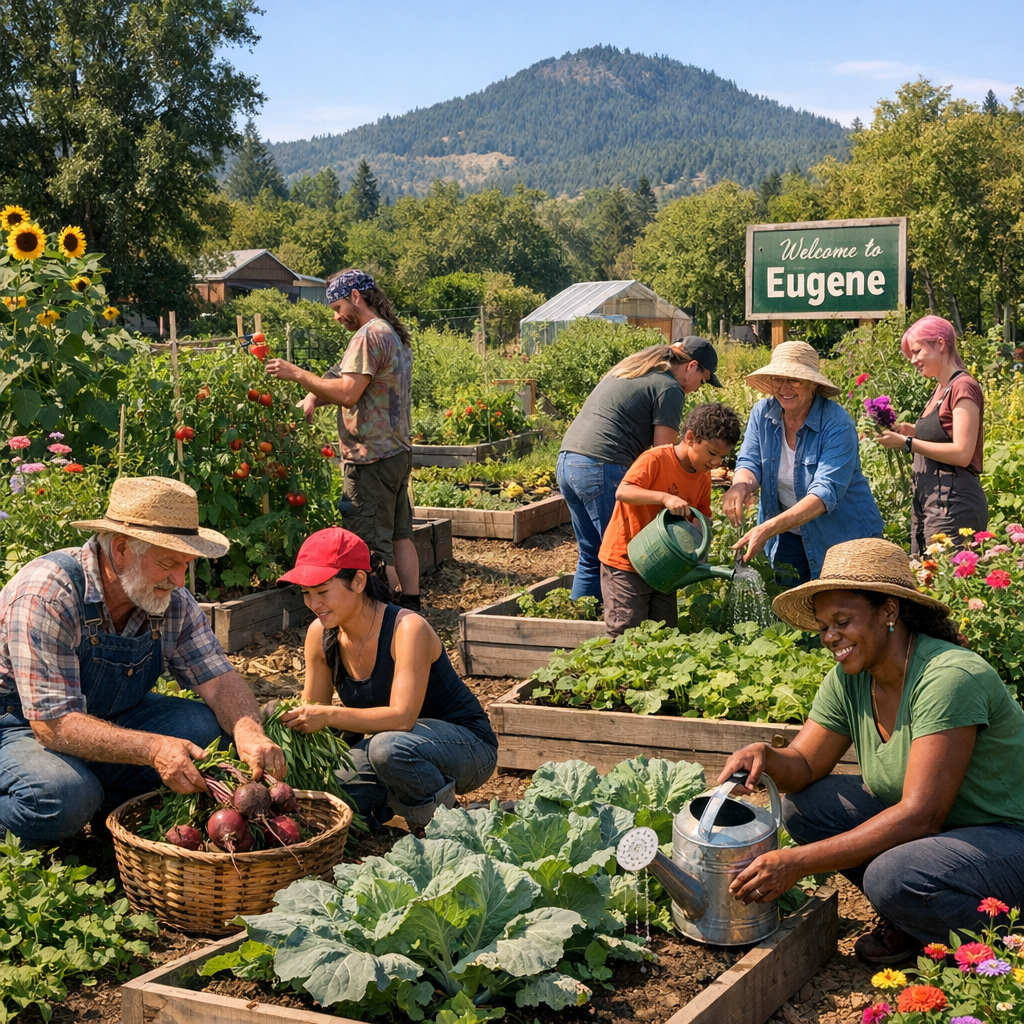
In the heart of Eugene, community gardens have blossomed into vital spaces where residents come together to cultivate not only plants but also relationships and a shared commitment to sustainability. These gardens offer numerous benefits, including access to fresh produce, opportunities for physical activity, and the fostering of community bonds.
City-Sponsored Community Gardens
The City of Eugene operates several community gardens across the city, providing approximately 400 plots for residents. These gardens are located at Alton Baker Park, Amazon, Mathews, Skinner Butte, and Whiteaker. Each site offers plots of varying sizes, with amenities such as access to tools and water. The annual lottery for new plot assignments opens in January, with applications accepted through mid-February. This initiative underscores the city’s commitment to promoting food agency, healthy recreation, and community building.
University of Oregon’s Grove Community Garden
At the University of Oregon, the Grove Community Garden serves as a student-run space where individuals can learn about growing food and connect with others interested in gardening. The garden operates as a communal growing space, with student staff leading planting and tending activities. Produce harvested is available for volunteers or donated to campus food programs, emphasizing the garden’s role in addressing food security and fostering community engagement.
Neighborhood Initiatives: Common Ground Garden
In the Friendly Street area, the Common Ground Garden stands as a testament to neighborhood-driven efforts in urban agriculture. Located at 21st and Van Buren Street, this food-sharing garden was established on a vacant city lot. It merges neighborhood connection with a love for healthy, locally grown food, building awareness around food security. Regular work parties invite community members of all ages and experience levels to participate, promoting inclusivity and shared learning.
Supporting Vulnerable Populations: Emerald Village Eugene
Emerald Village Eugene (EVE) is a tiny-house cooperative designed for individuals with very low incomes. The community garden at EVE provides residents with fresh produce, a space for relaxation, and a sense of empowerment through growing and tending plants. This initiative highlights the role of community gardens in supporting vulnerable populations by enhancing food security and promoting well-being.
Educational Opportunities: Horton Road Organics
Beyond the city limits, Horton Road Organics offers the Twining Vines Educational Program, integrating organic gardening with contemplative practice and community living. This program provides experiential training in organic gardening, meditation, and community development, contributing to the broader educational landscape of urban agriculture in the Eugene area.
Community gardens in Eugene serve as more than just spaces for cultivation; they are hubs of connection, education, and support. By participating in these gardens, residents contribute to a more sustainable and interconnected community, reinforcing the city’s commitment to urban agriculture and collective well-being.