

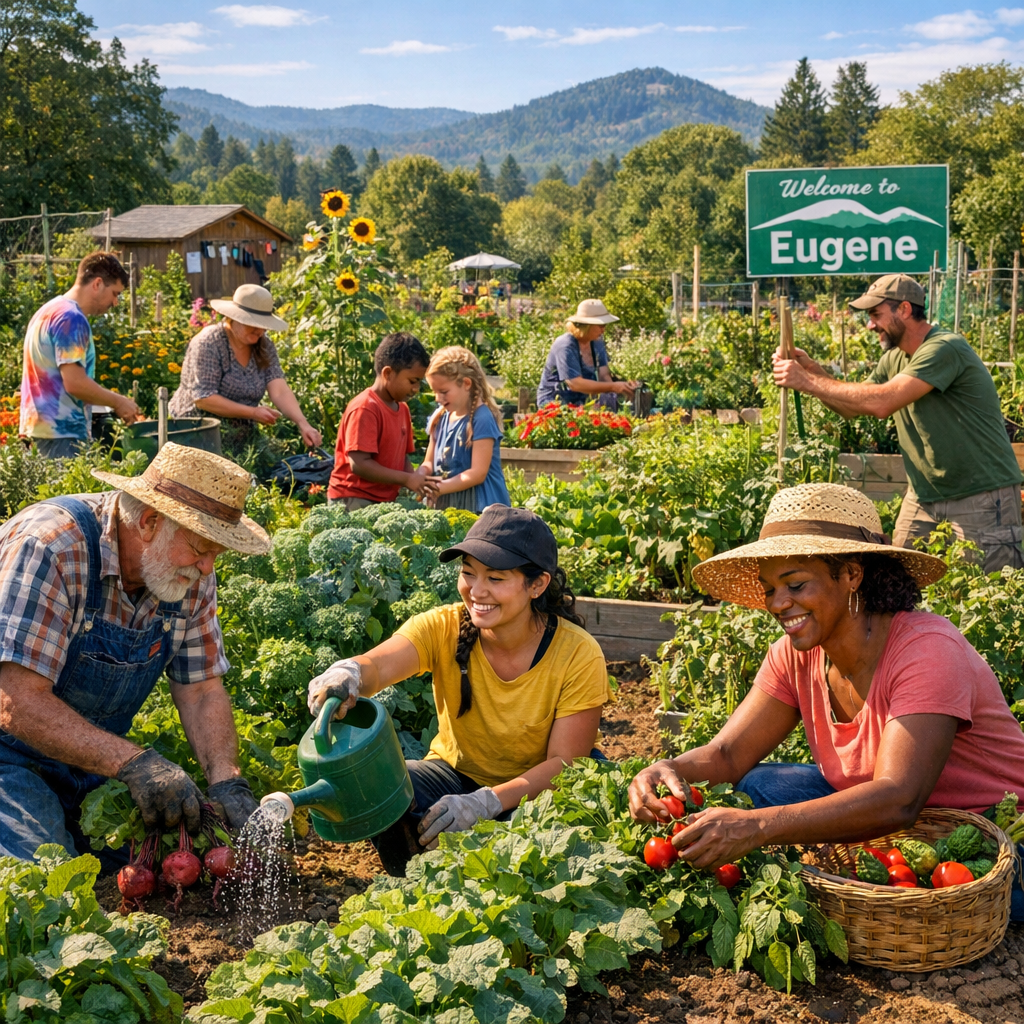
In Eugene, Oregon, community gardens have become vital spaces where residents come together to cultivate not only plants but also relationships and a shared sense of purpose. These gardens offer numerous benefits, including access to fresh produce, opportunities for physical activity, and the fostering of community bonds.
City-Sponsored Community Gardens
The City of Eugene operates several community gardens across the city, providing residents with the opportunity to rent plots and grow their own food. These gardens are located at Alton Baker Park, Amazon, Mathews, Skinner City, and Whiteaker. Each site offers plots of varying sizes, with fees that include access to tools and water. The annual lottery for plot assignments ensures equitable access for all community members. More information can be found on the city’s official website.
University Initiatives
The University of Oregon’s Grove Community Garden is a student-run space that emphasizes education and community engagement. Located at 1801 Moss Street, the garden hosts weekly work parties and workshops, inviting students of all skill levels to participate in growing food and learning about sustainable practices. The produce harvested is shared among volunteers or donated to local food programs. Details about involvement opportunities are available through the university’s Erb Memorial Union.
Neighborhood and Nonprofit Efforts
Beyond city and university initiatives, various neighborhood associations and nonprofits have established community gardens to serve specific populations and promote inclusivity. For instance, the Common Ground Garden in the Friendly Street area is a neighborhood food-sharing garden created on a vacant city lot. It serves as a hub for community connection and food security awareness. More information is available on the Friendly Area Neighbors website.
Additionally, Herbalists Without Borders Eugene maintains a bilingual learning garden at Skinner City Community Garden. This initiative focuses on herbal education and advocacy, promoting health justice and community engagement. Details about their projects and volunteer opportunities can be found on their official website.
Conclusion
Community gardens in Eugene exemplify the city’s commitment to sustainability, health, and social cohesion. By participating in these gardens, residents not only gain access to fresh produce but also contribute to a resilient and connected community. Whether through city-sponsored programs, university initiatives, or neighborhood efforts, there are ample opportunities for individuals to get involved and make a positive impact.