

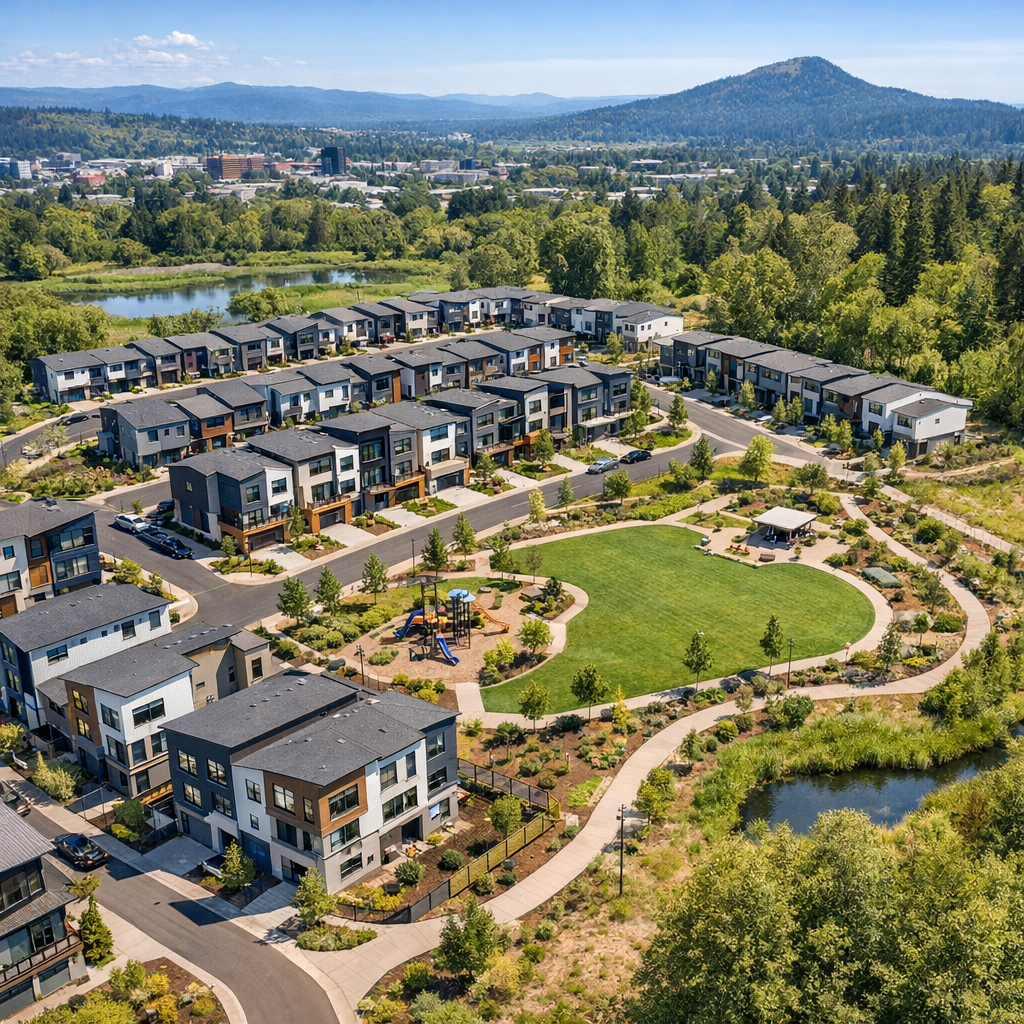
Eugene’s housing market is experiencing notable shifts, with developments in home values, rental trends, and new housing projects shaping the city’s real estate landscape.
Current Market Trends
As of March 2026, the average home value in Eugene stands at $473,231, reflecting a slight decrease of 0.3% over the past year. Homes typically go pending in about 21 days, indicating a relatively brisk market. The median sale price is $480,000, with a median list price of $514,933. Approximately 24.7% of sales are closing above the list price, while 55.6% are below, suggesting a balanced market environment. Source
In the rental sector, the average rent in Eugene is $1,851, slightly below the national average of $1,910. This represents a 3% year-over-year increase, highlighting a steady demand for rental properties. Source
Affordable Housing Initiatives
The city is actively addressing housing affordability through various initiatives. The Eugene-Springfield HOME Consortium has allocated federal HOME Investment Partnership Program funds to support rental housing developments for low-income households. Notable projects include:
- The Harlow: A proposed 27-unit affordable rental development at 1091 Coburg Road, targeting households earning no more than 60% of the area median income (AMI). Source
- Sawyer Station: A 40-unit affordable rental housing project at 1566 Main Street, also serving households earning up to 60% AMI. Source
Additionally, the city has partnered with the Oregon Department of Environmental Quality to promote the development of space-efficient, low-embodied carbon homes, aligning housing growth with environmental sustainability goals. Source
New Housing Developments
Several new housing projects are underway, contributing to Eugene’s evolving residential landscape:
- Rosa Village Cooperative: This infill affordable housing development, in partnership with Square One Villages and Aligned Architecture, features 40 one-bedroom flats and 12 two-bedroom townhomes. The project emphasizes community-focused design and provides homeownership opportunities to very low-income households through a limited-equity housing cooperative and community land trust. Construction began in November 2025. Source
- Peace Village Cooperative: Completed in 2023, this 70-unit campus offers affordable homeownership through a limited-equity housing cooperative and community land trust. The design includes tiny townhouses and micro-apartments, balancing housing density with connections to nature and community spaces. Source
- Grant Street Grow Homes: Located in the Far West neighborhood, this project provides permanently affordable homeownership for buyers at 61% to 80% AMI. The development includes three “grow homes” that can expand from one-bedroom to three-bedroom units, and one accessible ground-floor home. Source
These developments reflect Eugene’s commitment to expanding housing options and promoting sustainable, community-oriented living environments.
Conclusion
Eugene’s housing market is characterized by stable home values, a steady rental market, and proactive efforts to increase affordable housing. Ongoing and upcoming development projects aim to meet the diverse needs of the community, ensuring that Eugene remains a vibrant and inclusive place to live.