

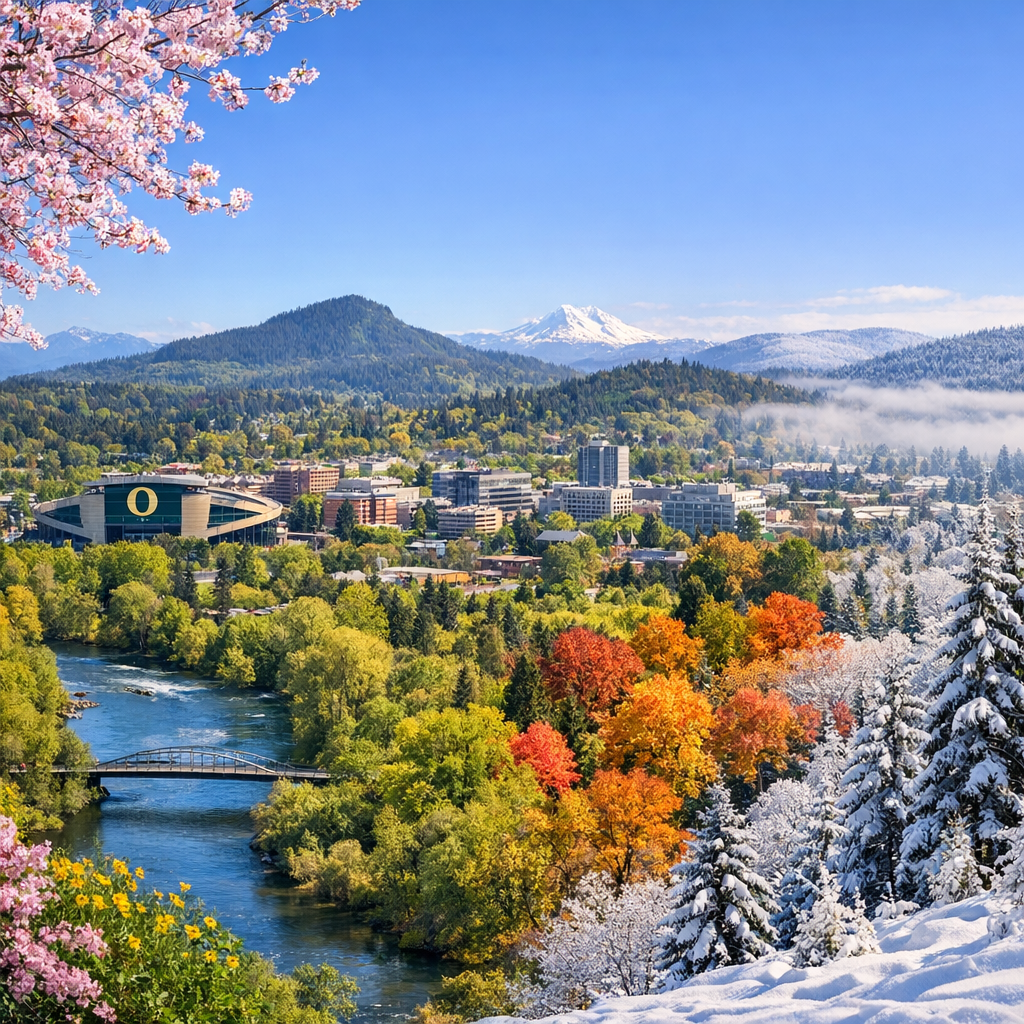
Eugene, Oregon, is known for its temperate climate, characterized by mild, wet winters and warm, dry summers. This climate supports a diverse range of flora and fauna, contributing to the region’s natural beauty.
Seasonal Weather Patterns
Winter
During winter, temperatures typically range from lows around 35°F (2°C) to highs near 48°F (9°C). December is the wettest month, averaging about 7.45 inches (189 mm) of precipitation. Snowfall is rare but possible, with occasional light snow events.
Spring
Spring brings gradually warming temperatures, with average highs reaching 59°F (15°C) in April. Rainfall decreases compared to winter months, averaging around 3.20 inches (81 mm) in April. The season is marked by blooming flora and increased outdoor activities.
Summer
Summers are warm and dry, with average highs peaking at 84°F (29°C) in August. Precipitation is minimal, averaging about 0.39 inches (10 mm) in August. This dry period is ideal for outdoor recreation and festivals.
Fall
Fall sees cooling temperatures and increasing rainfall. October averages highs of 64°F (18°C) and about 3.20 inches (81 mm) of precipitation. The changing foliage provides picturesque landscapes throughout the region.
Climate Change Impacts
Climate change is influencing Eugene’s weather patterns. The freeze-free growing season has extended by approximately 41 days since 1970, leading to longer allergy seasons due to increased pollen production. Additionally, the city faces significant risks from increased precipitation and wildfire hazards, with about 72% of buildings at risk of wildfire and 31% at risk of flooding.
Community Initiatives
In response to these challenges, Eugene has adopted the Climate Recovery Ordinance, aiming to reduce community fossil fuel use by 50% of 2010 levels by 2030. The city’s Climate Action Plan 2.0 outlines strategies to achieve these goals, focusing on sustainable development and resilience.
Understanding Eugene’s climate and the ongoing changes is essential for residents to adapt and contribute to the community’s sustainability efforts.